Smith County Dog Registration Information
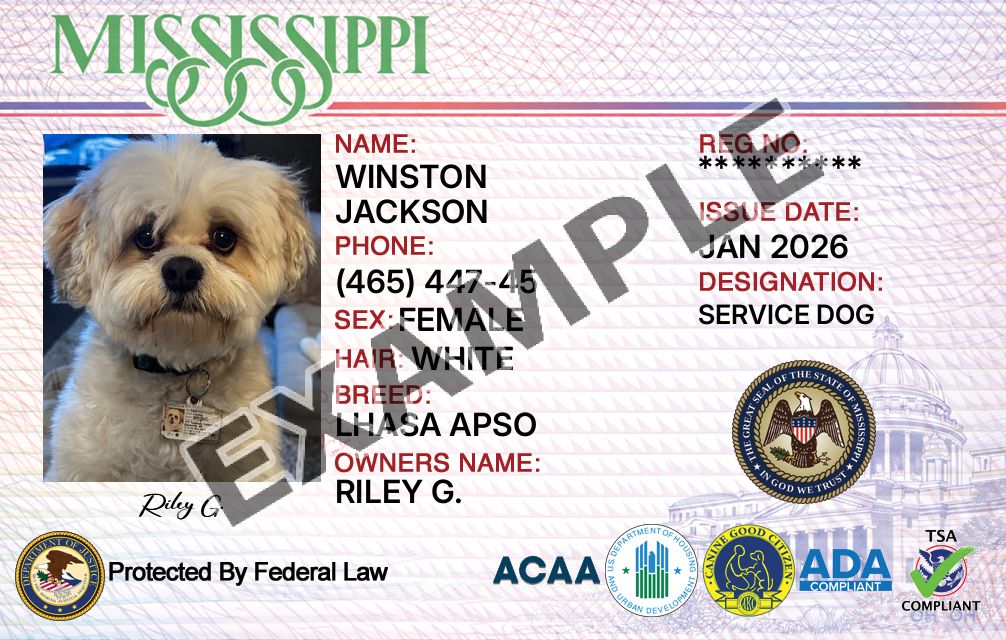
Service Dogs and Emotional Support Animals in Smith, Mississippi
Registering a Dog in Smith County, Mississippi (Service Dog or Emotional Support Dog)
If you’re searching where do I register my dog in Smith County, Mississippi for my service dog or emotional support dog, the key point is this: dog licensing (if offered/required) and rabies enforcement are handled locally, while service dog legal status comes from disability law (not a county “registration”), and emotional support animals (ESAs) are typically addressed under housing rules—not public-access rules.
Where to Register or License Your Dog in Smith County, Mississippi
Because licensing and enforcement are often handled at the county or city level, the offices below are common starting points when you need an animal control dog license Smith County, Mississippi answer or need help confirming local requirements for rabies tags, leash rules, and running-at-large enforcement. If you live inside city limits, your city may have additional rules beyond the county.
Smith County Sheriff’s Office
Address
206 Courthouse Square
Raleigh, MS 39153
Contact
Phone: (601) 782-4531
Email: jhouston@smithcountyms.gov
Why contact them: In many rural counties, the Sheriff’s Office is a practical first call for rabies enforcement questions, running-at-large complaints, and to ask which local office (county or city) issues tags or handles stray/animal-control functions.
Smith County Health Department (Mississippi State Department of Health)
Address
353-A Hwy 37
Raleigh, MS 39153
Contact
Phone: (601) 241-6247
Appointments: 855-767-0170
Office hours (published): Open Monday and Friday, 8:00 a.m. to 5:00 p.m.
Why contact them: Rabies is a public health issue. This office can help confirm local public-health guidance and connect you to resources for vaccination documentation and related requirements.
Taylorsville City Hall (for residents inside Taylorsville city limits)
Address
202 Eureka Street
Taylorsville, MS 39168
Contact
Phone: (601) 785-6531
Email: (not publicly listed in the sources used)
Office hours (published): Monday–Friday, 8:00 a.m. to 5:00 p.m.
Why contact them: If your address is within the city, local ordinances (leash rules, nuisance rules, and any city tag requirements) may apply in addition to county practices.
Smith County Chancery Clerk (County Courthouse area)
Address
201 Courthouse Square
Raleigh, MS 39153
Mailing: PO Box 39, Raleigh, MS 39153
Contact
Phone: (601) 782-9811
Email: (not listed on the official page used)
Office hours: (not listed on the official page used)
Why contact them: While this office is not typically “animal control,” courthouse offices can direct residents to the correct department if a local ordinance, board policy, or county process exists for licensing, tags, or fees. It’s a useful “county switchboard” option when you need to confirm where to pay or file locally.
Tip for faster answers: When you call, share your physical address (and whether you’re inside Raleigh or Taylorsville city limits). Local jurisdiction determines whether you should follow county-level guidance or city-level ordinances for where to register a dog in Smith County, Mississippi.
Overview of Dog Licensing in Smith County, Mississippi
Is there a countywide “dog license” in Smith County?
In Mississippi, dog regulation commonly involves a combination of state rabies law and local (county/city) ordinances. Some places issue a local dog tag/license, while others focus on enforcing rabies vaccination and nuisance/leash rules without a formal annual license process. That’s why the most accurate way to confirm a dog license in Smith County, Mississippi requirement is to contact the county or your city hall and ask: “Do you issue dog licenses/tags here? If not, which office enforces rabies tags and animal-at-large rules?”
Rabies vaccination is the non-negotiable baseline
Mississippi law requires dogs (and cats) three months of age or older to be vaccinated against rabies, and the law describes the use of a rabies tag/collar and certificate practices tied to vaccination. Enforcement duties are placed on local law enforcement/peace officers. Practically, this means your “registration” proof often starts with your rabies certificate and rabies tag, even if there is no separate county dog license.
What to do if you’re specifically asking about a service dog or emotional support dog
A service dog or ESA can still be subject to local rules that apply to all dogs (rabies vaccination, leash rules, and nuisance rules). However, service dog status is not created by a county license, and an ESA is not the same as a service dog for public access. The sections below explain these differences clearly so you can avoid scams and save time.
How Dog Licensing Works Locally in Smith County, Mississippi
Step 1: Confirm your jurisdiction (county vs. city limits)
Start by confirming whether your home is: unincorporated Smith County (county enforcement) or inside a municipality like Raleigh or Taylorsville (city ordinances may apply). This matters because “where do I register my dog in Smith County, Mississippi” can have different answers depending on where you live.
Step 2: Ask the right question (license, tag, or rabies compliance)
When residents ask for an animal control dog license Smith County, Mississippi, the correct office may vary depending on local structure. Ask:
- Do you issue a dog license or local tag? If yes, what documents are required and where do I pay?
- If you don’t issue a license, who enforces rabies vaccination/tag requirements and handles animal-at-large issues?
- If I live in city limits, does the city have a separate ordinance or process?
- Are there deadlines, renewal periods, or fees for local tags (if applicable)?
Step 3: Prepare proof (rabies certificate and basic owner ID)
Even where a formal license exists, local offices typically rely on proof of rabies vaccination as the foundational document. Keep a copy of your vaccination certificate and the date administered, and maintain a current rabies tag on the dog’s collar when appropriate. If your dog is a service dog, you should still keep vaccination records current—service dog status does not waive public health requirements.
Step 4: Understand what “registration” does—and does not—do
A local dog license or tag (when offered) typically helps the county/city: track rabies compliance, identify owners, and support animal control/public health enforcement. It does not automatically grant public access rights, and it does not turn a pet into a service dog or emotional support animal.
Service Dog Laws in Smith County, Mississippi
Service dogs are defined by trained work or tasks—not by a “registration”
A service dog is generally understood as a dog trained to do specific work or tasks for a person with a disability. The legal protection comes from disability law frameworks, not from buying an ID card online and not from a local dog license. So if you’re asking where to register a dog in Smith County, Mississippi for service dog status, the honest answer is: there usually is no county office that “registers” a service dog to make it a service dog.
What local offices can help with (and what they can’t)
Local offices can help with
- Rabies vaccination compliance questions
- Local licensing/tag processes (if any)
- Leash/running-at-large enforcement guidance
- What to do if your dog is lost or found
Local offices typically cannot
- Issue a “service dog certificate” that creates legal service dog status
- Guarantee access to private businesses
- Replace training requirements with paperwork
- Validate third-party “registries”
Public health still applies to service dogs
Even though a service dog is not created by licensing, it is still a dog living in Mississippi and must comply with rabies vaccination requirements and other generally applicable health and safety rules. Keeping your service dog’s vaccination proof organized also helps avoid delays if an officer, housing provider, or veterinary clinic asks for documentation.
Emotional Support Animal Rules in Smith County, Mississippi
An ESA is not a service dog
An emotional support animal (ESA) is generally a companion animal that provides emotional support that alleviates one or more symptoms of a disability. Unlike a service dog, an ESA is not defined by trained tasks for disability-related needs in the same way, and ESAs typically do not have the same public-access status as service dogs.
What “registration” means for an ESA in practice
If you’re asking where do I register my dog in Smith County, Mississippi for an ESA, the local-government “registration” piece is usually the same as for any dog: rabies vaccination and any local license/tag process (if the county/city offers one). Separately, ESA “documentation” commonly relates to housing (for example, when requesting a reasonable accommodation from a landlord), and that documentation is not issued by the county clerk or sheriff’s office.
Avoid common ESA scams
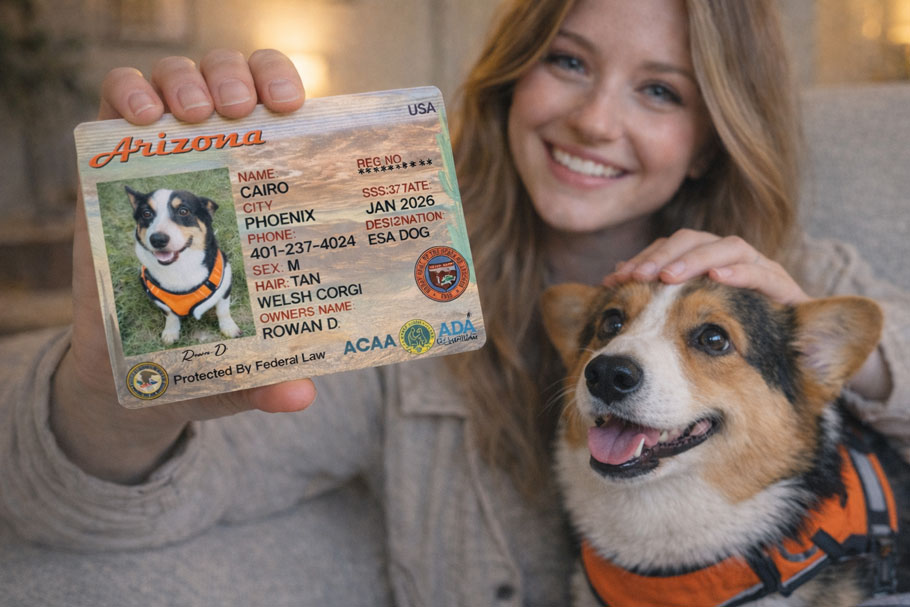
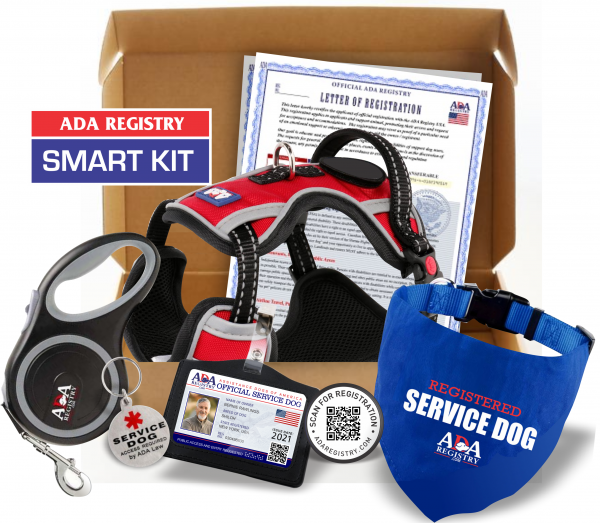
Be cautious about websites that sell “official ESA registration,” “federal ESA ID cards,” or “service dog certificates.” A local dog license in Smith County, Mississippi (if available) is not the same thing as ESA approval, and paying a third party does not automatically create legal rights. Focus on legitimate local compliance (rabies/licensing) and, when needed for housing, appropriate medical documentation through your healthcare provider.
Frequently Asked Questions
- Dog license: A local county/city process (when offered) tied to identification, fees, and often rabies compliance.
- Service dog: A dog trained to perform tasks/work for a person with a disability; not created by buying a license or online certificate.
- Emotional support animal (ESA): Provides emotional support; commonly addressed in housing accommodation contexts and does not typically have the same public-access status as a service dog.
Disclaimer
Licensing requirements and office locations may change. Residents should verify details with their local animal services office within Smith County, Mississippi.
Register A Dog In Other Mississippi Counties
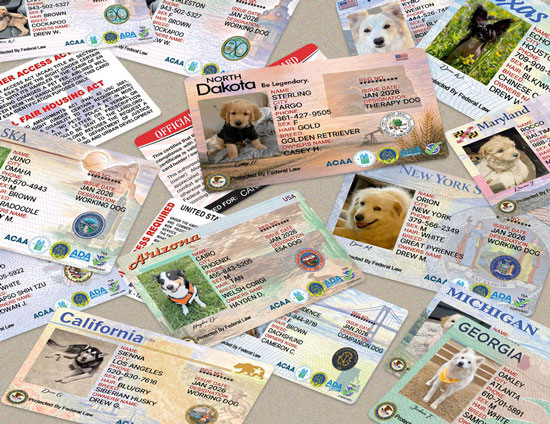
Select your county below to get started with your dog’s ID card. Requirements and license designs may vary by county, so choose your location to see the correct options and complete your pup’s registration.
- Adams County Dog Registration
- Alcorn County Dog Registration
- Amite County Dog Registration
- Attala County Dog Registration
- Benton County Dog Registration
- Bolivar County Dog Registration
- Calhoun County Dog Registration
- Carroll County Dog Registration
- Chickasaw County Dog Registration
- Choctaw County Dog Registration
- Claiborne County Dog Registration
- Clarke County Dog Registration
- Clay County Dog Registration
- Coahoma County Dog Registration
- Copiah County Dog Registration
- Covington County Dog Registration
- DeSoto County Dog Registration
- Forrest County Dog Registration
- Franklin County Dog Registration
- George County Dog Registration
- Greene County Dog Registration
- Grenada County Dog Registration
- Hancock County Dog Registration
- Harrison County Dog Registration
- Hinds County Dog Registration
- Holmes County Dog Registration
- Humphreys County Dog Registration
- Issaquena County Dog Registration
- Itawamba County Dog Registration
- Jackson County Dog Registration
- Jasper County Dog Registration
- Jefferson County Dog Registration
- Jefferson Davis County Dog Registration
- Jones County Dog Registration
- Kemper County Dog Registration
- Lafayette County Dog Registration
- Lamar County Dog Registration
- Lauderdale County Dog Registration
- Lawrence County Dog Registration
- Leake County Dog Registration
- Lee County Dog Registration
- Leflore County Dog Registration
- Lincoln County Dog Registration
- Lowndes County Dog Registration
- Madison County Dog Registration
- Marion County Dog Registration
- Marshall County Dog Registration
- Monroe County Dog Registration
- Montgomery County Dog Registration
- Neshoba County Dog Registration
- Newton County Dog Registration
- Noxubee County Dog Registration
- Oktibbeha County Dog Registration
- Panola County Dog Registration
- Pearl River County Dog Registration
- Perry County Dog Registration
- Pike County Dog Registration
- Pontotoc County Dog Registration
- Prentiss County Dog Registration
- Quitman County Dog Registration
- Rankin County Dog Registration
- Scott County Dog Registration
- Sharkey County Dog Registration
- Simpson County Dog Registration
- Stone County Dog Registration
- Sunflower County Dog Registration
- Tallahatchie County Dog Registration
- Tate County Dog Registration
- Tippah County Dog Registration
- Tishomingo County Dog Registration
- Tunica County Dog Registration
- Union County Dog Registration
- Walthall County Dog Registration
- Warren County Dog Registration
- Washington County Dog Registration
- Wayne County Dog Registration
- Webster County Dog Registration
- Wilkinson County Dog Registration
- Winston County Dog Registration
- Yalobusha County Dog Registration
- Yazoo County Dog Registration